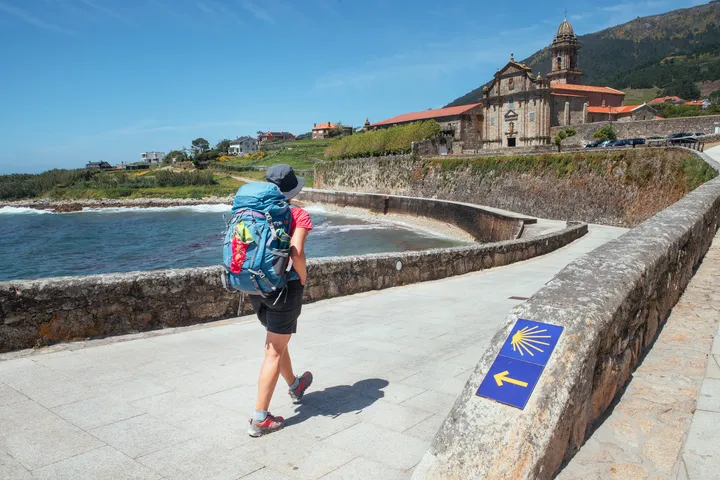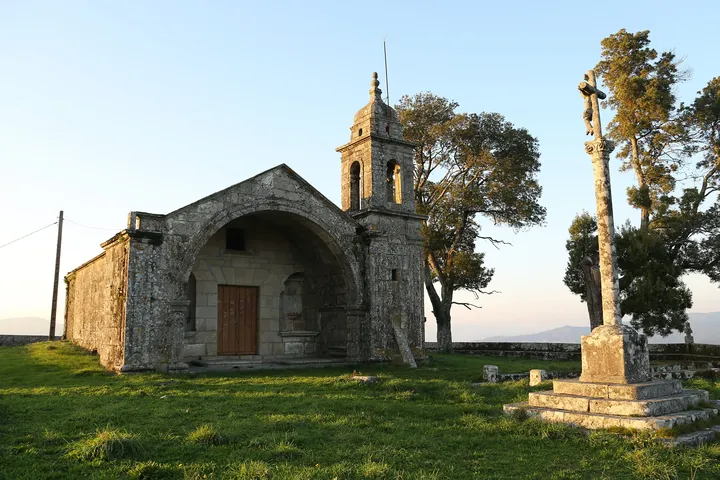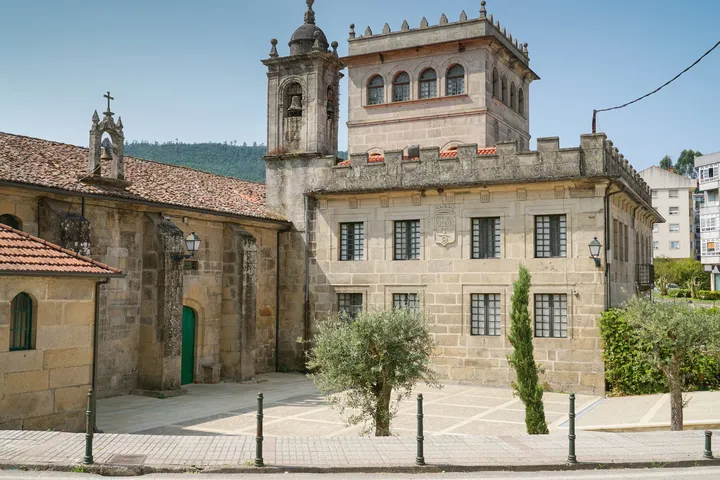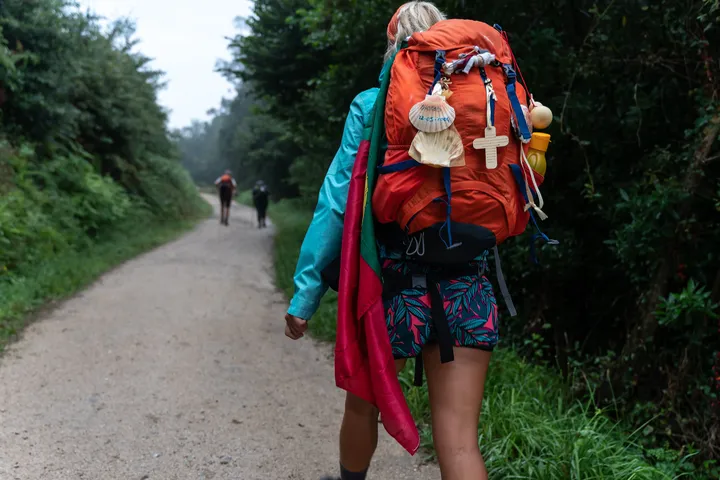

There are hundreds of articles about the Camino de Santiago covering kit lists, rucksack weight and boot recommendations. This is not going to repeat all of that. This article is about what actually matters when it is your first time.
The things nobody mentions until you have been walking for three days and can no longer ignore them.
When is the Best Time to Walk the Portuguese Camino?
The quick answer is spring and early autumn. But the fuller answer has more nuance to it.
- April to June: The best window for most people. Comfortable temperatures, green landscapes and fewer people than summer. It will rain, particularly in Galicia, but rain on the Camino is part of the experience, and the paths are beautiful in wet weather.
- July and August: Peak season. Hostels fill up, the heat in the Portuguese interior can be punishing, 35 to 40 degrees inland, and the experience is more social but considerably less quiet. If you enjoy meeting people and are comfortable in heat, August has its own particular energy.
- September and October: The second ideal window. Walkers thin out, temperatures drop and the Camino regains its composure. Days are shorter, so you need to set off earlier.
- November to March: For experienced walkers or those with a strong constitution. Frequent rain, short days and some hostels closed. The solitude of the Camino in winter, however, is something quite different, those who do it tend not to regret it.
Holy Year (when 25th July falls on a Sunday): the next ones will be 2027 and 2032. In those years, the number of pilgrims on all routes increases sharply.
The Rucksack: the Most Common Mistake
The number one piece of advice from any experienced pilgrim is always the same: you have packed too much. Everyone packs too much the first time.
The ideal rucksack weight is between 10 and 12 per cent of your body weight. For someone weighing 70 kg, that means a maximum of 7 to 8 kg including water. Every kilogram over that is a kilogram you carry for hours, and the cumulative effect on your knees and lower back is very real.
What You Actually Need
- Underwear for 2 to 3 days (wash by hand each evening)
- One complete change of clothes
- A lightweight, waterproof wind jacket
- Convertible trousers with a zip-off leg
- Walking poles if you are over 45 or have any history of knee trouble
- A small first-aid kit: needles, thread, gauze, antiseptic and blister plasters (Compeed)
- A head torch for early starts before dawn
What You Do Not Need
- More than two pairs of technical walking socks
- Your full-size bath towel from home (take a microfibre travel towel)
- Paperback books (dead weight, use your phone)
- An entire pharmacy in your first-aid kit (another pilgrim will always have what you need)
Footwear: More Important Than Everything Else
High-ankle mountain boots are not the right choice for the Portuguese Camino. The terrain does not demand them and the extra weight on your feet compounds over the kilometres. Most experienced walkers prefer trail running shoes or low-cut walking boots.
The brand matters far less than the fit. Your feet will swell as the days go by; your footwear should have half a size of extra room to prevent pressure on your toes at the end of each stage.
The single most important rule: your footwear must be properly broken in before you start. Setting off on day one in brand new boots is the most expensive mistake a first-time pilgrim can make.
Walk in your footwear for at least three or four sessions of 15 km before you begin the Camino. If any rubbing appears, you have time to adapt or change. Once you are in Portugal, it is too late.
Blisters: They Are Not Inevitable
Many people assume that blisters are simply part of the Camino experience. They do not have to be.
Blisters form for three reasons: friction, moisture and heat. Double-layer technical socks (brands such as Darn Tough or Injinji are popular on the Camino) reduce friction dramatically. Keeping your feet dry, changing your socks when they get wet and applying a little petroleum jelly or anti-blister balm on known pressure points are the measures that genuinely work.
If a small blister appears: do not puncture it. Cover it with a Compeed plaster and keep walking. If it has already broken: clean it, disinfect it and cover it properly before you set off.
What you must not do under any circumstances: ignore it and hope it resolves itself.
The Pilgrim Passport: What it is and Where to Get it
The credential, or pilgrim passport, is the document that records your progress on the Camino. It is stamped at hostels, churches, bars and tourist offices along the route.
On arrival in Santiago with a stamped credential and having walked at least the final 100 km on foot, you can collect the Compostela, the official certificate of completion.
- Where to get it: At the Pilgrim Office at Santiago Cathedral, at tourist offices in towns along the Camino, at pilgrim hostels or through your national Friends of the Camino association.
- Cost: Free in most cases, or with a voluntary contribution of €1 to €2.
If you want to receive the Compostela, you need at least two stamps per day for the final 100 km, from Tui, Redondela or Pontevedra, depending on which section you are walking.
Booking Accommodation: Should You or Shouldn't You?
There is a philosophy on the Camino of travelling without advance reservations, trusting that a bed will always be available. In the quieter months, that works well enough. In July and August, it is a significant gamble.
The practical advice: book your first night and your last night in every case. In high season, book the entire Galician section (Tui to Santiago) in advance, this is the busiest stretch of the whole route.
For the stages in Portugal, the situation varies by time of year. Outside the summer months there is considerably more room to be flexible.
The Most Common Mistakes First-Time Pilgrims Make
- Setting off too late on the first day and arriving at the hostel to find it full.
- Not stretching at the end of each stage, muscle soreness accumulates quickly.
- Not eating enough during the walk because you do not want to stop.
- Underestimating the first stage because it looks short on the map.
- Letting your phone battery run down to zero without having charged it the night before.
- Not carrying enough cash, many small villages and rural hostels do not accept cards.
- Pushing through pain signals from your body because you do not want to fall behind.
One More Thing
The Camino is not a race. There is no ranking for who arrives first, who carries the lightest pack or who takes the fewest rest days. Every pilgrim has their own reason for being there and their own way of doing it.
What is true is this: the better prepared you are, the more mental and emotional space you have to actually enjoy the walk rather than simply endure it. Sort out the rucksack, look after your feet, book when it makes sense to, and let everything else happen as it will.