
The Portuguese Camino from Lisbon is one of the most complete routes in the entire network of paths leading to Santiago de Compostela. Not the shortest, not the easiest — but one of the most varied: historic cities, open countryside, the Atlantic coast and a crossing into Spain over the River Minho.
This guide covers the full itinerary from the Portuguese capital to the cathedral in Santiago. Stages, distances, key decisions and the places worth your attention.
Why Choose the Portuguese Camino
There are practical reasons and there are reasons to do with the character of the route. The practical ones first: the Portuguese Camino from Lisbon covers around 620 km and can be walked in 25 to 30 days. If you start from Tomar or Porto, the distances are considerably shorter, roughly 400 km and 240 km respectively.
As for character: the Portuguese route is less crowded than the French Way, the landscapes are more varied and the relationship with the rural world is closer. Walkers who choose this route tend to be looking for something different from the most heavily-trodden path.
The stretch from Porto to Santiago has become the second most popular Camino in the world, after the French Way. The infrastructure along this section is well developed and navigation is straightforward.
The Two Main Variants
Portuguese Camino Central
Leaves Lisbon heading through the interior of the country: Santarem, Tomar, Coimbra, Agueda, Porto and from there north towards the border via Barcelos and Ponte de Lima. This is the traditional route and the one with the strongest historical documentation.
The section between Lisbon and Porto covers roughly 380 km. Many walkers skip this section and begin in Porto, which is an officially accepted starting point for collecting the Compostela (provided you walk the final 100 km on foot).
Portuguese Coastal Way
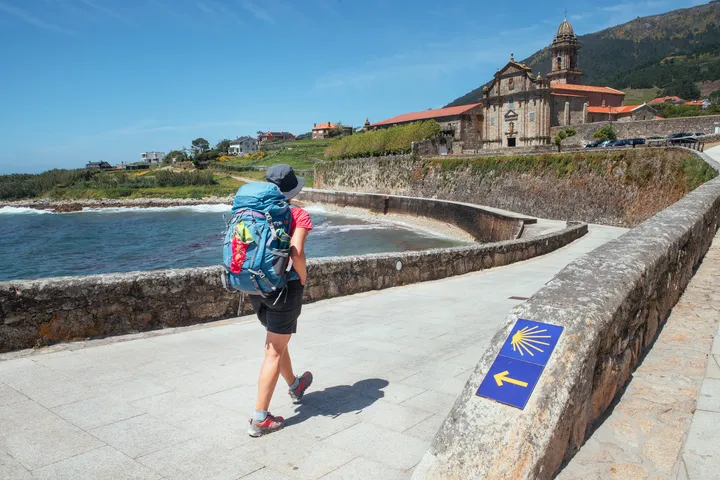
Leaves Porto following the Atlantic coast northwards. Passes through Viana do Castelo, Caminha and enters Spain at A Guarda before joining the central route. It is longer but visually more striking: dunes, sea cliffs, fishing villages and the Atlantic to your right for days on end.
Many pilgrims combine both variants: walking the central route from Lisbon to Porto, then switching to the coastal variant up to the border.
To receive the Compostela you must have walked at least the final 100 km on foot (or 200 km by bicycle) and have your pilgrim passport stamped at least twice per day during that section.
Lisbon to Porto: Stages Through the Interior
This 380 km section is the least walked part of the Portuguese Camino, but it has a great deal to offer. Stamps are harder to come by and the hostel network is thinner, but the landscapes are quieter and encounters with other pilgrims have a more personal quality.
- Lisbon to Alverca: 23 km. First stage, starting at Lisbon Cathedral. Urban sections until you leave the city behind.
- Alverca to Azambuja: 28 km. A longer stage with some road walking. Crosses the Tagus valley.
- Santarem: Capital of Portuguese Gothic architecture. Worth at least half a day.
- Tomar: Home of the Knights Templar. The Convent of Christ is not to be missed.
- Coimbra: Portugal's oldest university city. A minimum of one overnight stop to see the city properly.
- Porto: End of the first major section. Most pilgrims take a rest day here.
If you are starting from Lisbon with fewer than 20 days available, consider beginning in Coimbra or Porto instead. The early stages demand more logistical planning and the infrastructure is thinner than on the later sections.
Porto to the Spanish Border
This is the busiest section of the Portuguese Camino. Waymarking is excellent, hostels are well distributed along the route and the sense of community among pilgrims is noticeably stronger.
- Porto to Barcelos: 52 km over two stages. The first day typically ends in Vila do Conde or Povoa de Varzim.
- Barcelos to Ponte de Lima: 33 km. Passes through one of the most attractive medieval towns in Portugal.
- Ponte de Lima to Valenca: 44 km over two stages. The Camino follows the Lima valley.
- Valenca to Tui: 2 km across the international bridge over the River Minho. Crossing into Spain is one of the most memorable moments of the entire route.
The Camino in Galicia: Tui to Santiago
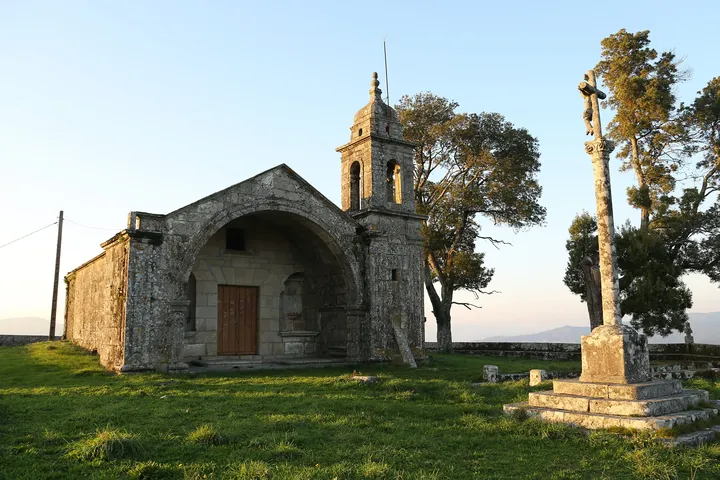
The final 120 km of the Portuguese Camino pass through Galicia. The landscape changes noticeably: greener, wetter, more densely wooded. Stone granaries, wayside crosses and traditional farmhouses are the visual hallmarks of this part of the route.
- Tui to O Porrino: 14 km. The first Spanish stage, calm, well signed and a gentle introduction to Galicia.
- O Porrino to Redondela: 15 km. The Camino moves towards the Ria de Vigo. The stone viaduct in Redondela is the first great landmark of the Galician section.
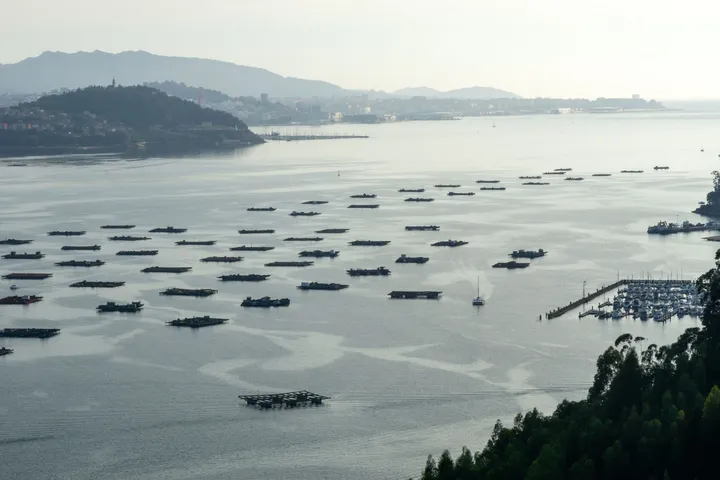
- Redondela to Pontevedra: 18 km. Good terrain with ria views throughout. One of the most pleasant stages in Galicia.
- Pontevedra to Caldas de Reis: 22 km. Woodland sections and an arrival at the thermal spring town.
- Caldas de Reis to Padron: 18 km. Padron is the place where, according to tradition, the boat carrying the body of Saint James first arrived on Galician soil.
- Padron to Santiago: 25 km. The final stage. The walk into Santiago and the arrival in the Plaza del Obradoiro is the end of the road.
How Many Days Do You Need
From Lisbon: 25 to 32 days at a relaxed pace. From Porto: 12 to 14 days. From Tui (the Galician section only): 5 to 6 days.
Most pilgrims completing the full route from Lisbon plan for 28 to 30 stages with a rest day or two along the way. That is a sensible rhythm which allows you to arrive without injury and with enough energy left to enjoy the cities en route.
What Nobody Tells You Before You Go
- The section between Lisbon and Porto has thinner infrastructure. Carry more cash and book accommodation ahead.
- In summer, the heat in the Portuguese interior can be intense, often above 35 degrees. Always set off before 8 in the morning.
- The coastal variant has stretches of deep sand that are far more tiring than they look on the map.
- Redondela is one of the best stopping points on the Galician section. Do not rush through it.
- The arrival in Santiago can be emotionally overwhelming. Do not book a flight home for the same afternoon.